Project
No Safe Place
A series of interconnected projects that investigate different aspects of American gun culture
The weapons manufacturing industry’s current marketing strategy depends on the polarization between anti-gun proponents and gun enthusiasts: The more fear and friction that exists between the two sides, the more demand there is for sales of firearms. I believe if we cannot create a productive dialogue about this issue, no change will occur in our society.
My art aims to encourage dialogue between these opposing viewpoints about gun culture and gun control in America through collaborative conceptual pieces that involve audience participation. In July 2012, when a mentally ill gunman opened fire in a theater in Aurora, Colorado, I was sleeping less than five miles away. As an artist I immediately felt a responsibility to respond to what I considered an exponentially escalating social problem. Thus began my current project on gun violence and gun ownership.
I began by making large-scale drawings of guns, which then led me to the streets to find out what others were thinking about this issue. I would ask both strangers and friends to make their own drawings of guns, which I collected and then used to make large-scale collages and works of art. Later, I turned to my own rural community in Colorado and began to have dialogues with my own friends, neighbors, and acquaintances to discover who owned, used, and collected assault weapons. I spoke with gun-owners candidly on why they own them. I borrowed weapons from their collections to create artifacts of our conversations, which I then incorporate into art installations that merge performance, video, art objects, and sound.
My project is about creating dialogue about gun culture and the proliferation of weapons in the US. I believe art has the potential to help us find new ways to look at and theorize gun culture in the US.
Dark Night / Century
Dark Night and Century were the first works created for No Safe Place, begun in the days following the 2012 Aurora theater shooting.
Unable to make sense of the tragedy, I turned to drawing as a way of thinking. Gathering fragments from news reports, amateur videos, and other visual references surrounding the event, I reorganized this imagery into layered compositions, not to recount the event but more to map the raw confusion and sorrow brought by the event.
The large-scale drawings do not attempt to explain what happened. They grew from a need to hold grief and uncertainty long enough to look at them closely, searching for a visual language that might make the incomprehensible, if not understandable, at least possible to contemplate.

Dark Night, 2012 (Mixed media on Japanese paper)
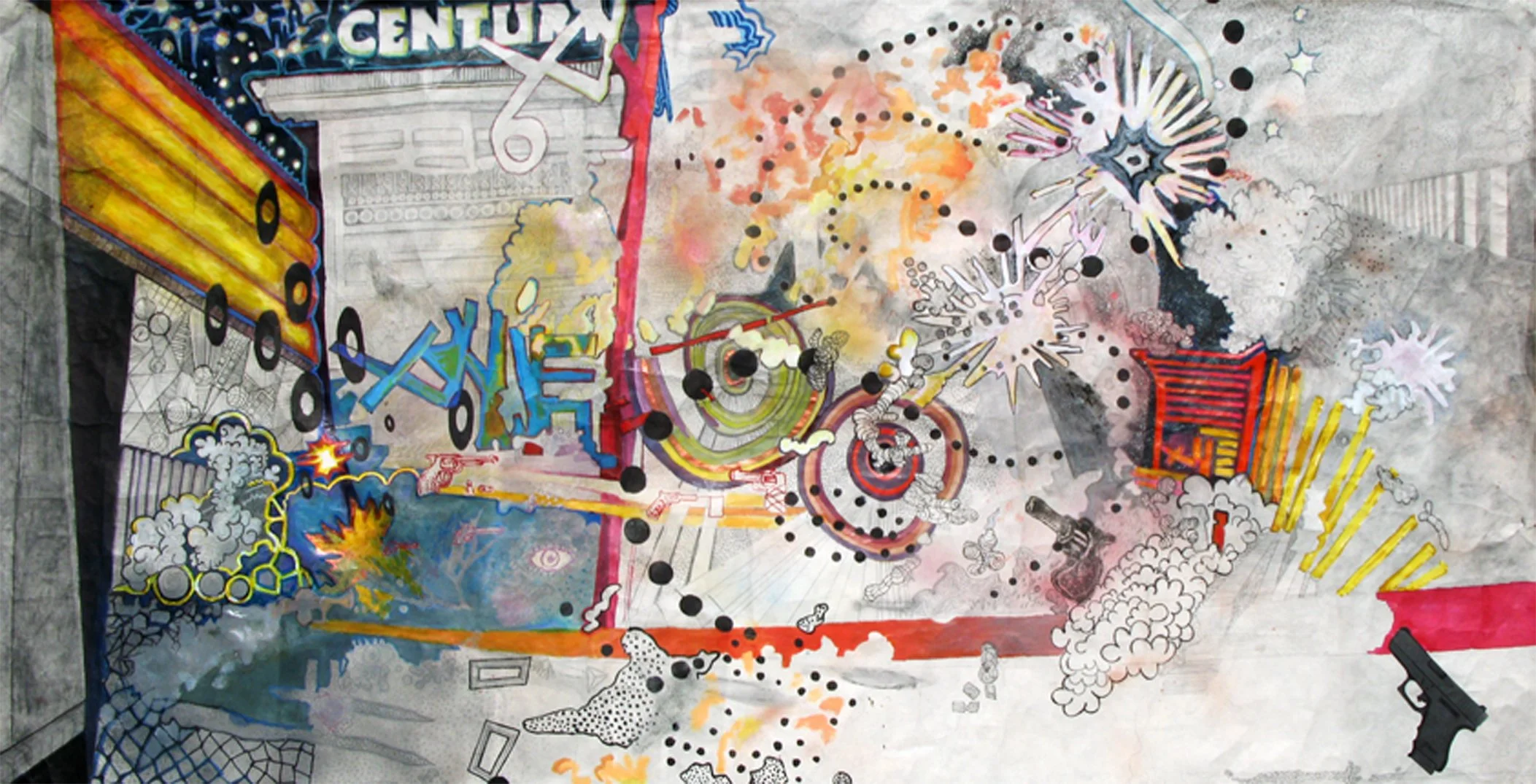
Aurora, 2012 (Mixed media on Japanese paper)
Gun Collection
Shown in Boston, MA; Provincetown, MA; Denver, CO; Boulder, CO; Brooklyn, NY
Gun Collection began with conversations. Wanting to better understand the rapid proliferation of guns in America, I interviewed gun owners in my rural Colorado community about why they collected firearms and what those objects meant to them. Some collectors chose to loan me firearms from their collections—Glock pistols, AR-15s, shotguns, revolvers, and family heirlooms—trusting me to take them into my studio.
Working from these loaned firearms over the course of the project, I repeatedly created sculptural facsimiles using a heavy-gauge metal foil in brilliant colors reminiscent of special occasion candy wrappers. By patiently pressing the foil over every contour by hand, each replica became an intimate record of prolonged observation and touch. The finished forms are at once seductive and unsettling, hovering between celebration and threat, fetish object and relic.
Although the sculptures originated from actual firearms, they also embody the conversations that surrounded them and, when installed in exhibition, they create dialogue. Rather than arguing a position, Gun Collection explores how personal experience, memory, commerce, fear, and desire become intertwined in the cultural life of these objects.

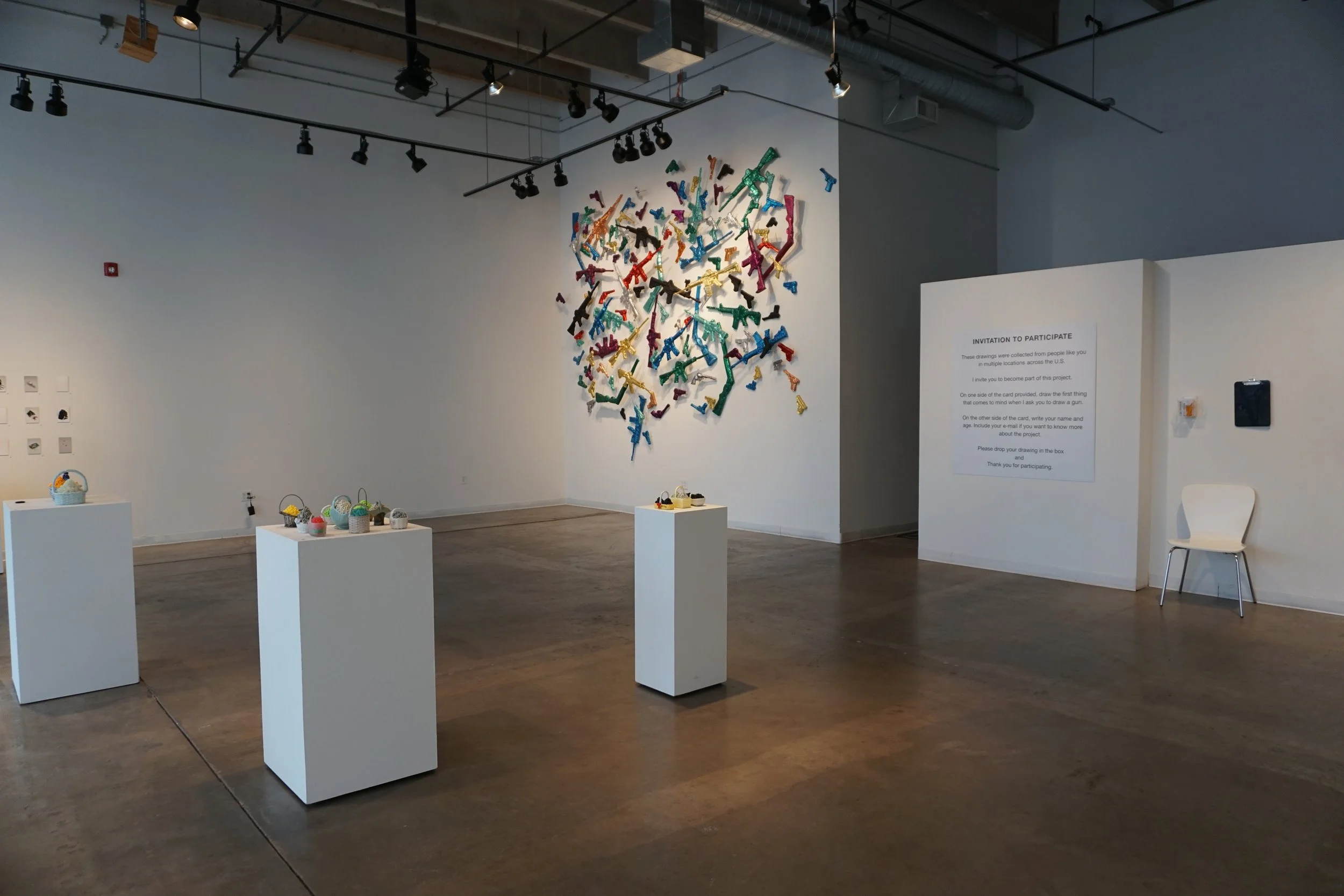
Installation view at Redline Gallery, Denver, CO
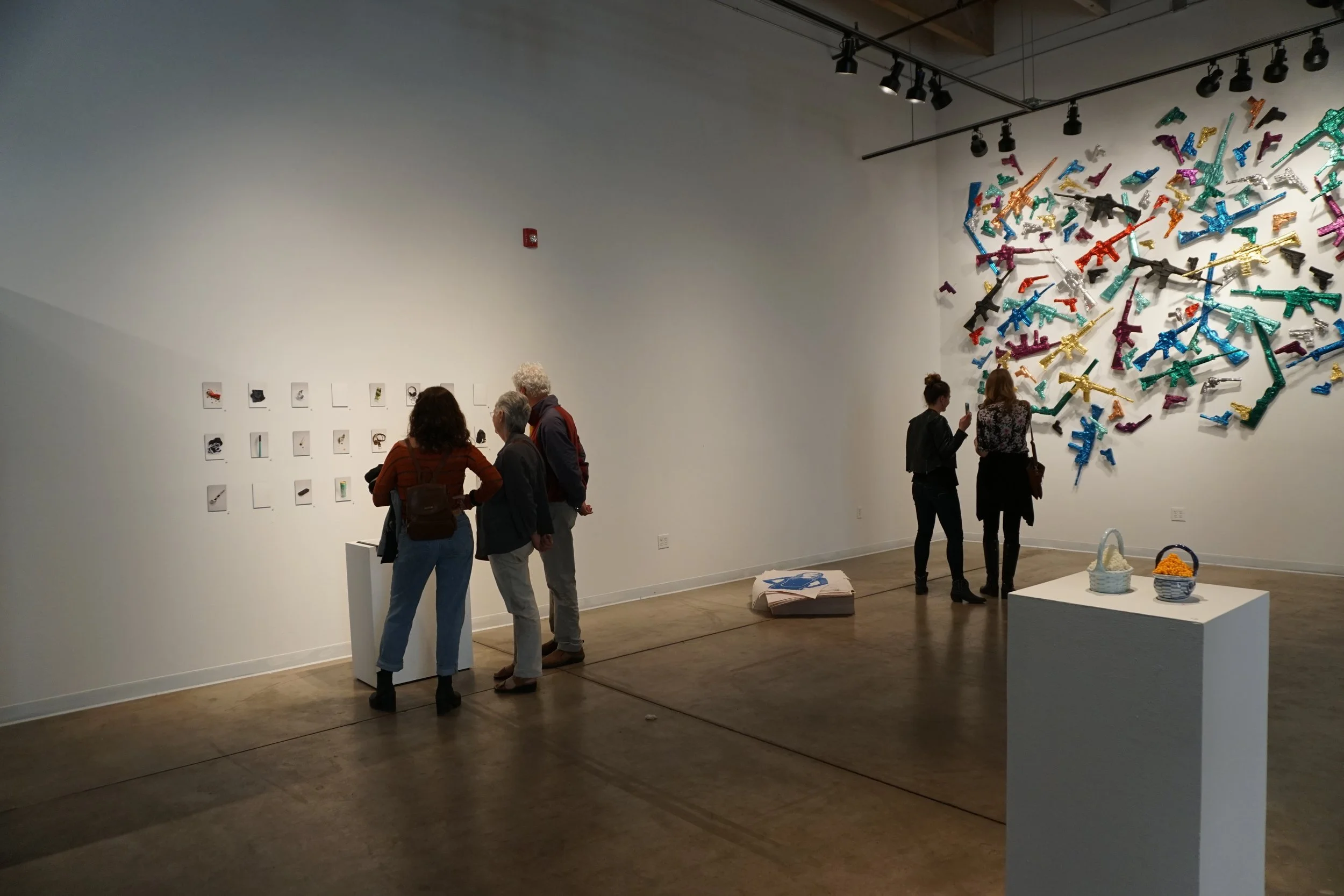
Installation view at Redline Gallery, Denver, CO
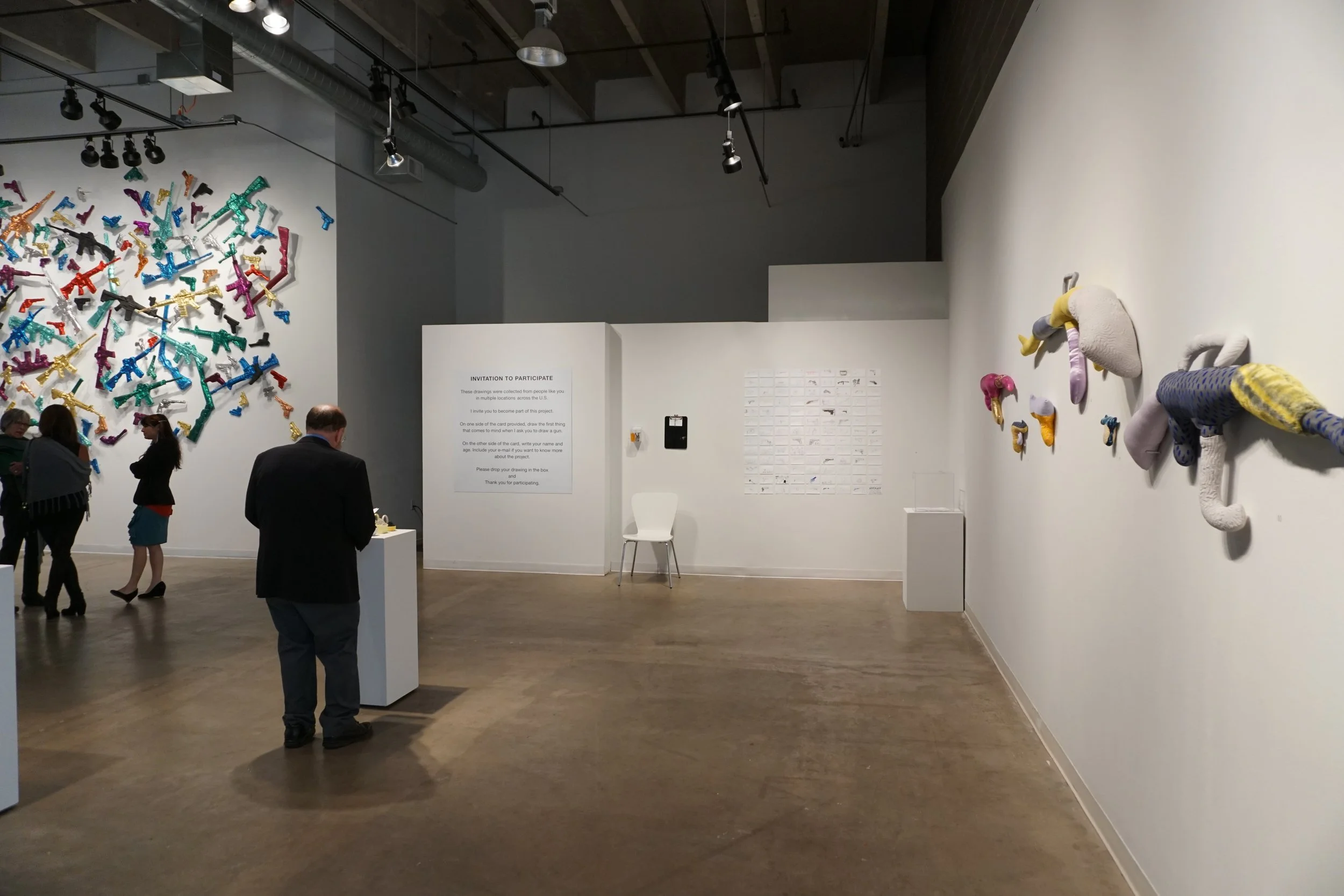
Installation view at Redline Gallery, Denver, CO
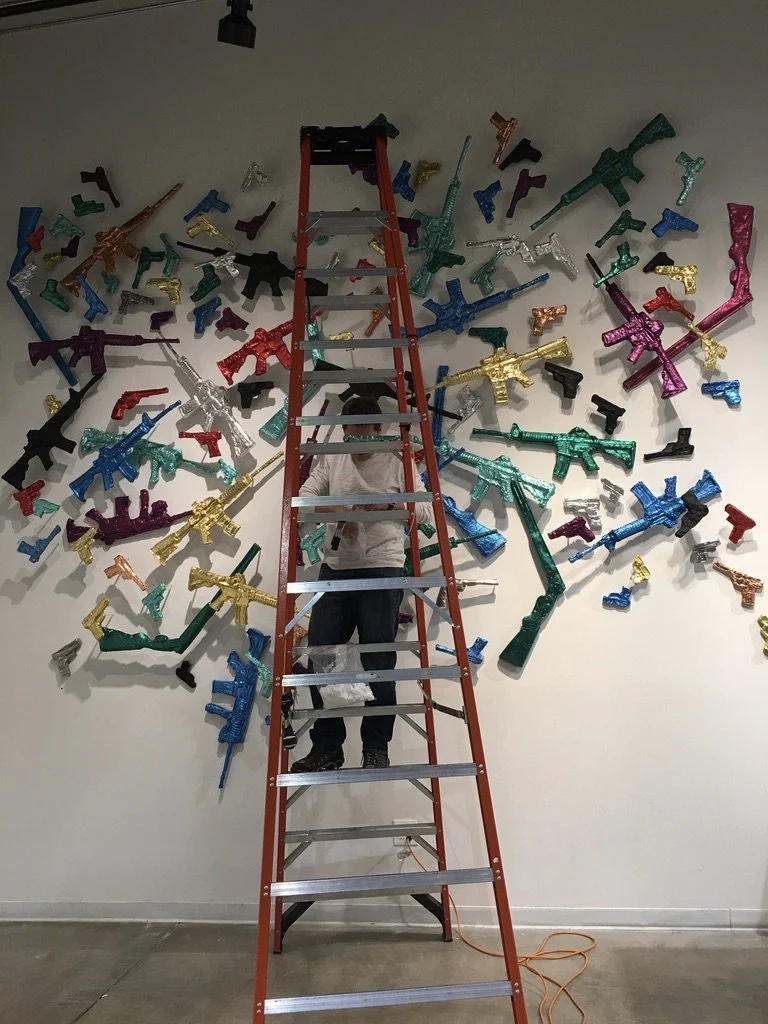
Installation in process at Redline Gallery, Denver, CO
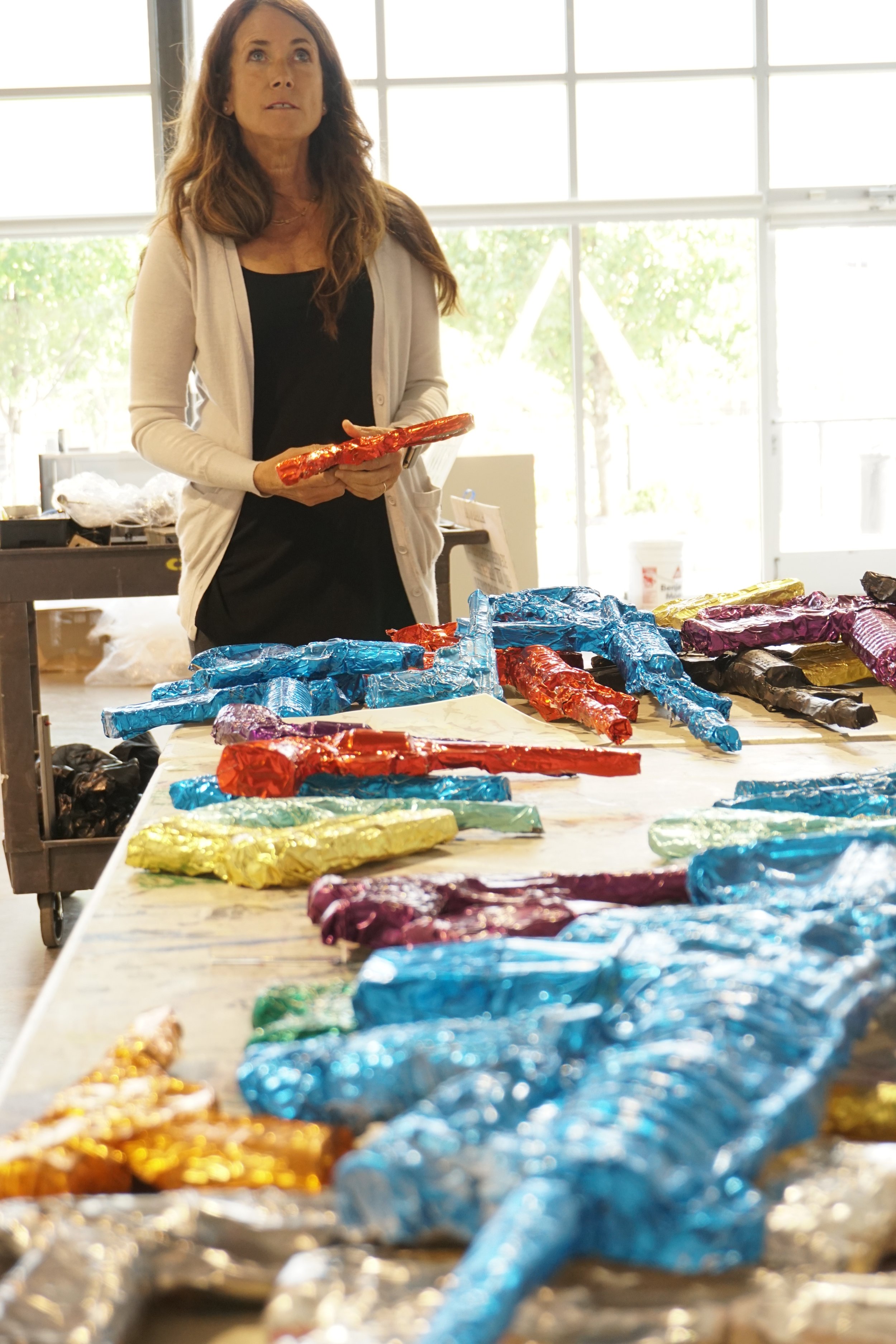
Installation in progress
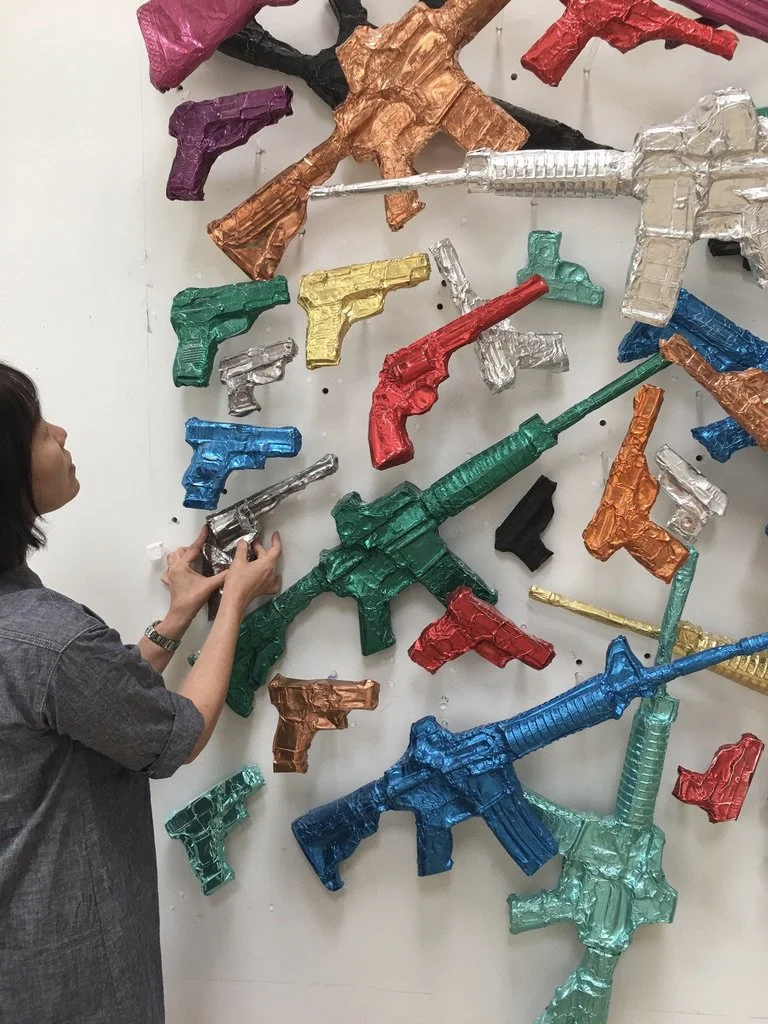
Collaborative installation process
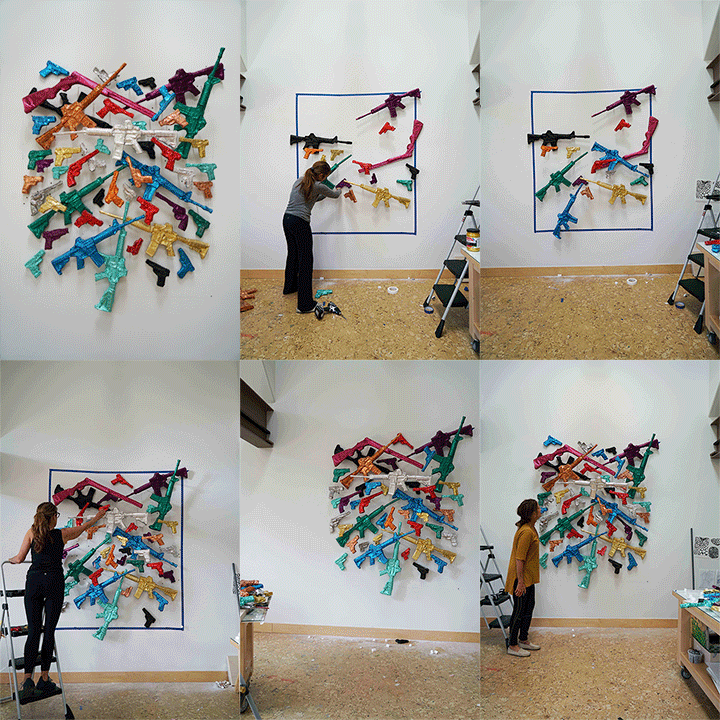
Collaborative installation process
Foil burnishing process used to create guns
No Safe Place
Installation at Fine Arts Work Center, Provincetown, MA - 2013
No Safe Place brings together drawing, sculpture, sound, light, photography, video, and installation to examine the cultural landscape surrounding firearms in America. Rather than presenting a single narrative or argument, the installation invites viewers to move through a network of interconnected works, each offering a different point of entry into questions of fear, desire, identity, commerce, and community. Meaning emerges through the relationships between the works as much as within the individual pieces themselves.


Installation Video
Created by filmmaker Mike Hay, this video offers another interpretation of No Safe Place. Rather than documenting the installation, it traces the relationships, rhythms, and resonances that emerge through movement, sound, and time; inviting viewers to experience the work from a different perspective.
The soundtrack features a collaborative gong composition orchestrated by sound healer Samantha Caparelli.
Draw A Gun
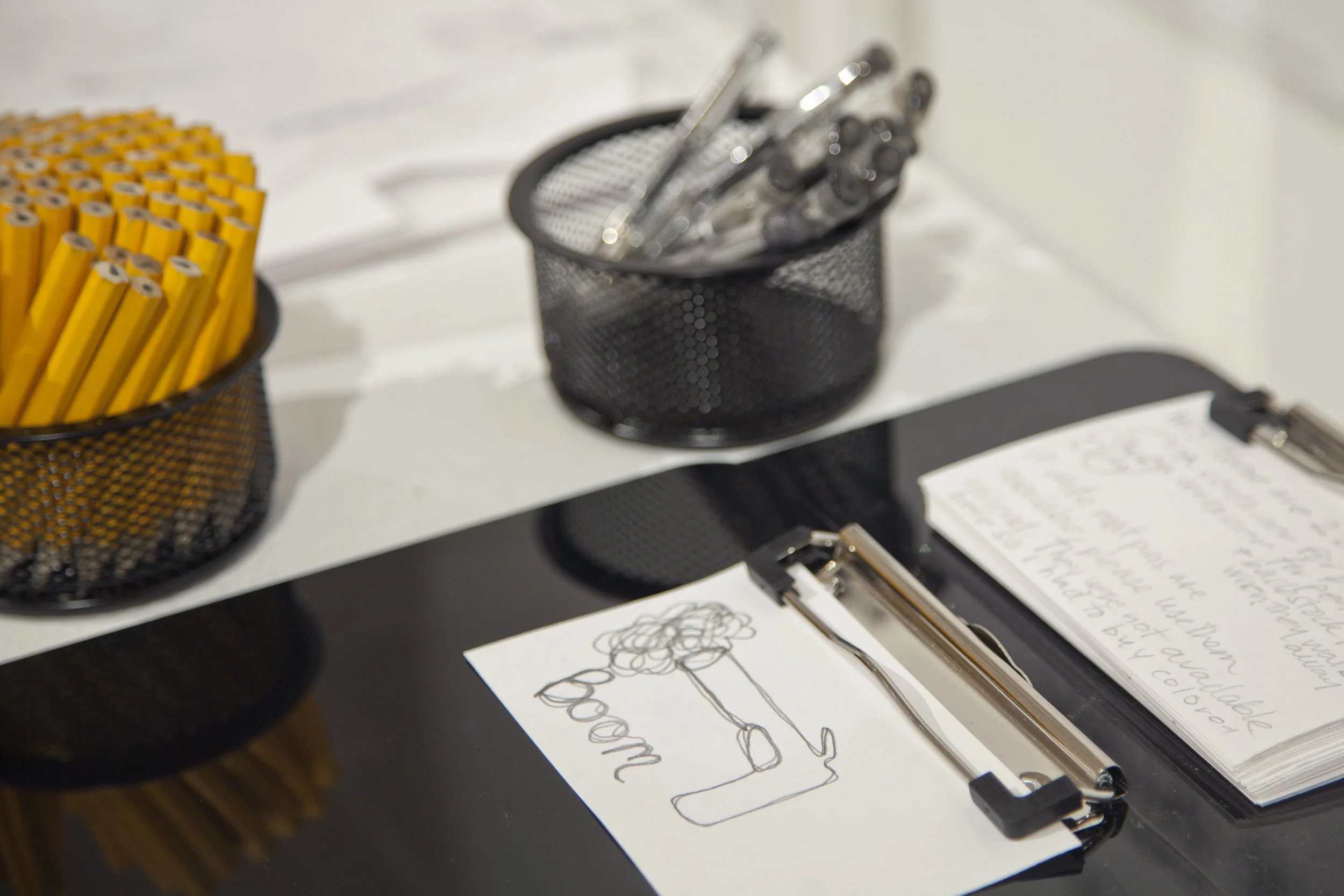
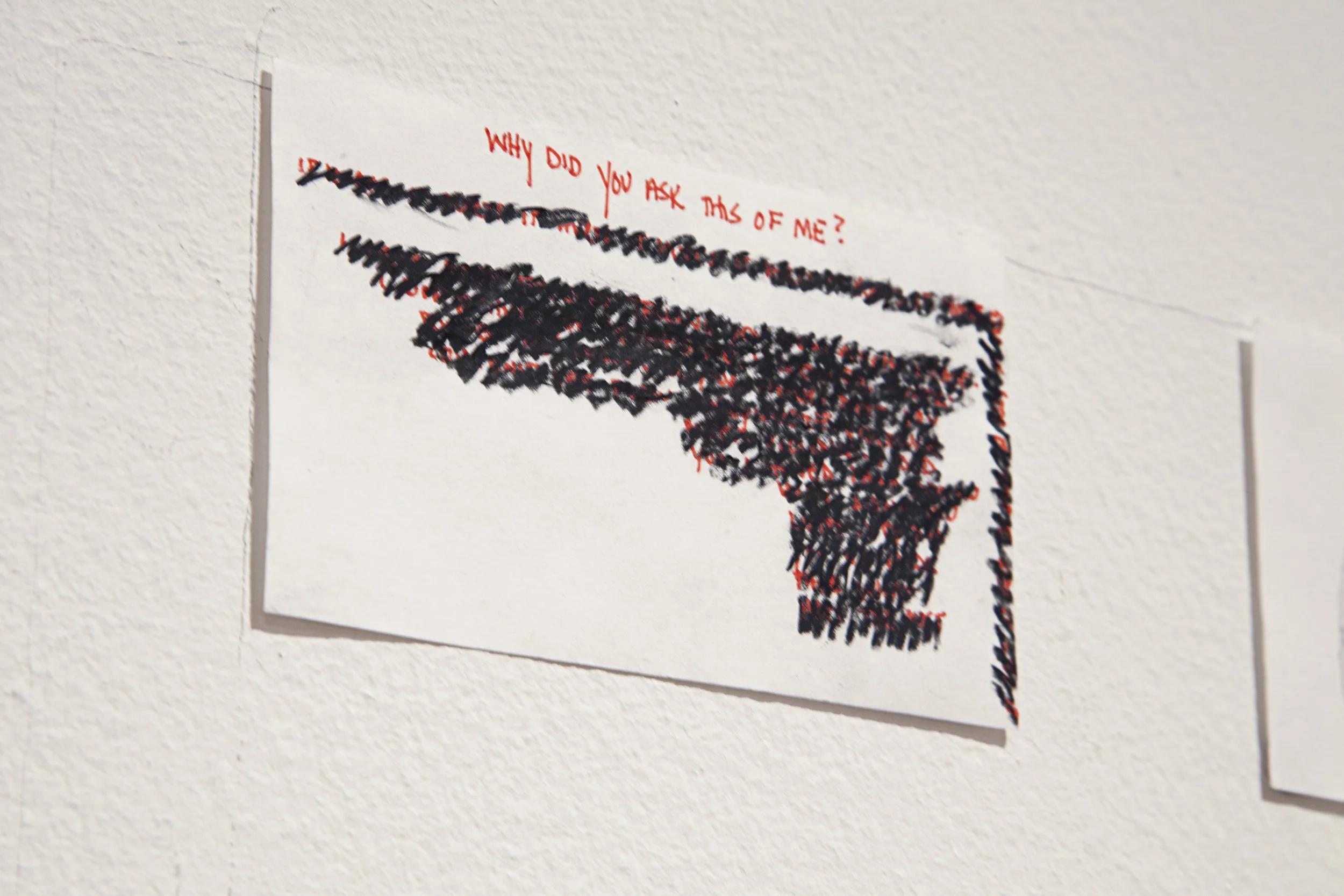
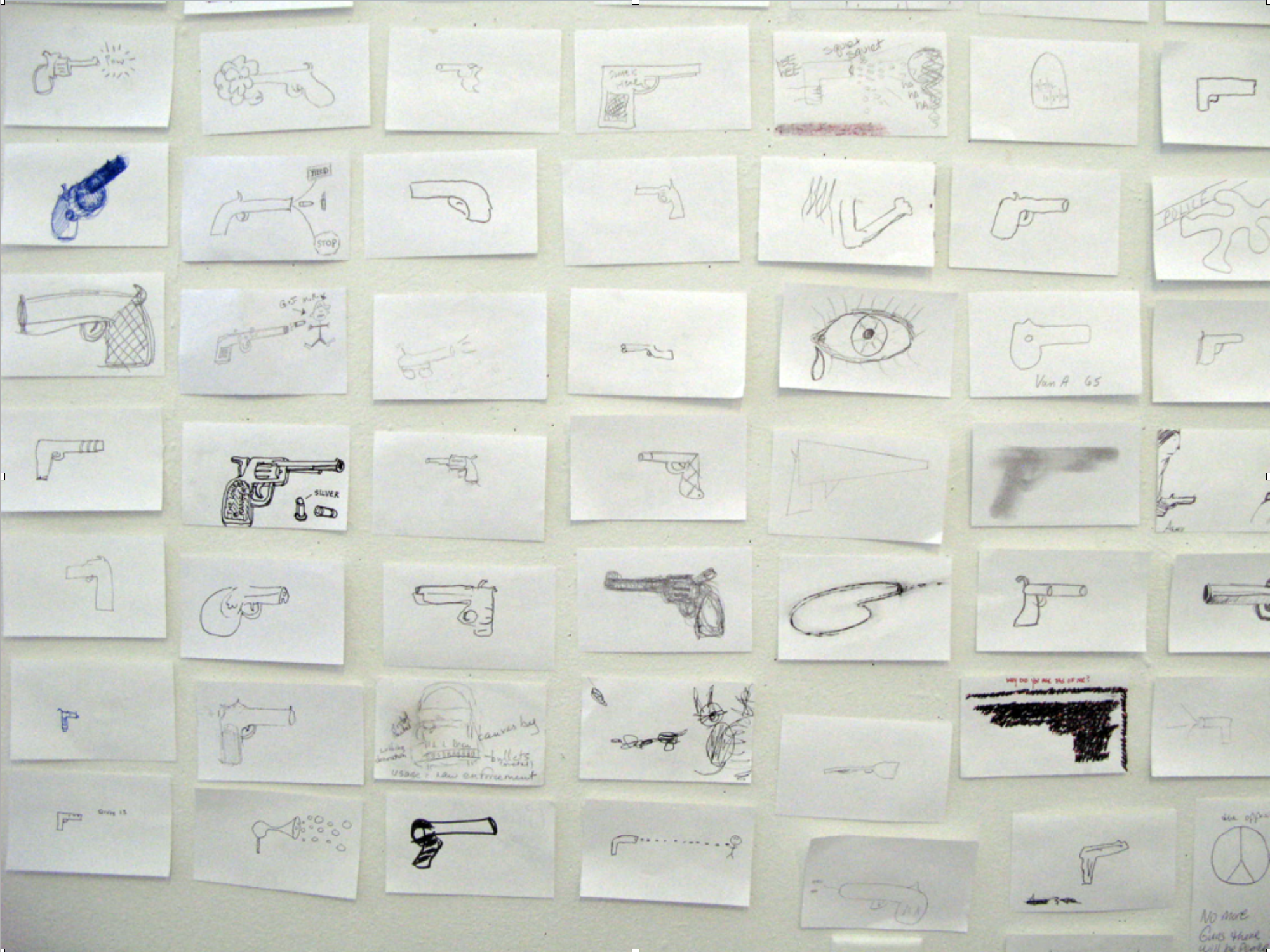
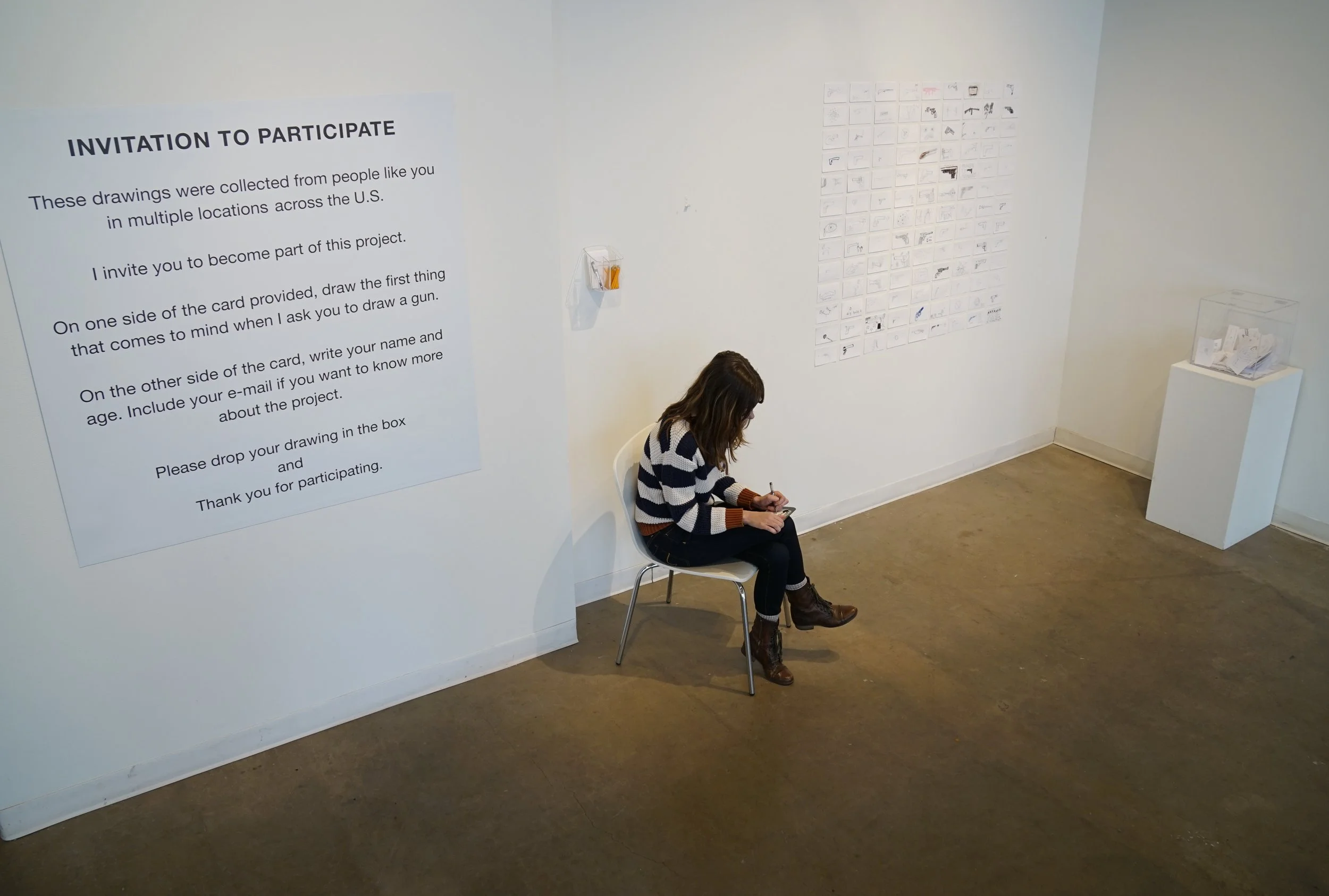
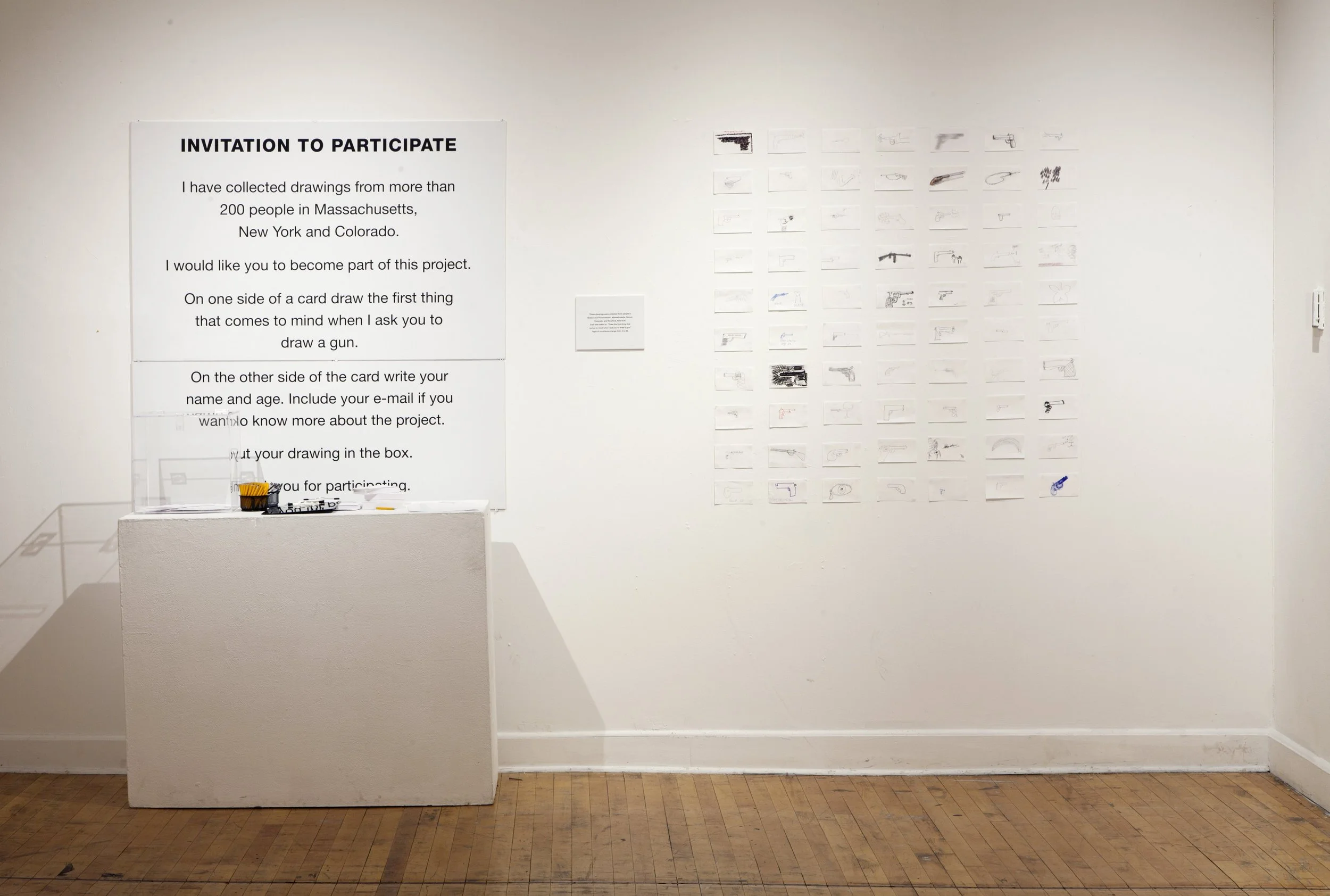
Draw a Gun began with a clipboard, a stack of index cards, and a simple request: “Draw the first thing you think of when I say “Draw a gun.”
Beginning in 2012, I approached strangers wherever our paths crossed—on sidewalks, in restaurants, at museums and community events, in homes, and while traveling. As people drew the first image that came to mind, the drawings often became the starting point for conversations about memory, experience, fear, recreation, family, and identity.
Over time I collected hundreds of drawings from participants ranging in age from four to eighty-six. Together, the drawings formed an evolving portrait of the many ways guns inhabit our collective imagination.
The project remained open as it traveled. Exhibited alongside a simple kiosk with index cards and pencils, visitors were invited to contribute their own drawings, allowing the archive—and the conversation—to continue growing.

Constructed Scenes
These digital collage paintings grew from a desire to understand the psychological and cultural atmosphere surrounding No Safe Place.
Gathering fragments from the Rocky Mountain Western region where I lived —my own drawings and photographs alongside found imagery, I assembled scenes that could be read as either benign or quietly threatening. Through layering and juxtaposition, I searched for the tension I was observing in the culture around me.
Each composition provides a stage rather than a story. Meaning emerges through the relationships between images, inviting viewers to construct their own narratives and discover their own connections.

Continental Divide Red (Digital painting)

Gunfall (Digital painting)

Alpine Glow (Digital painting)

Rocky Flats (Digital painting)

Rocky Flats 2 (Digital painting)
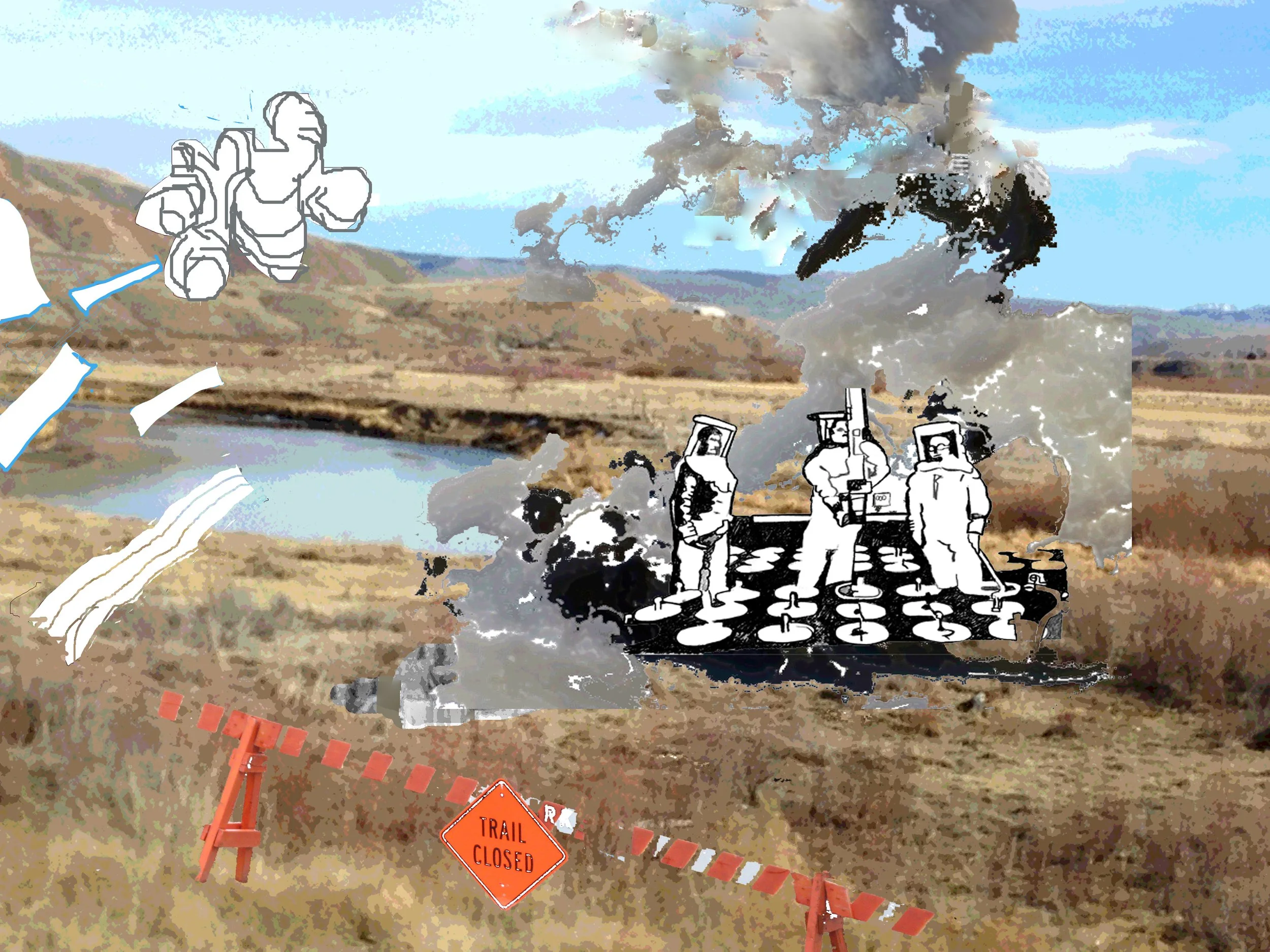
Rocky Flats (Digital painting)

Nuke Bierstadt (Digital painting)

Strange Sky Nuke (Digital painting)

Purina (Digital painting)

Socks, Guns, Grass (Digital painting)

Snowman Scene (Digital painting)

Snow Park (Digital painting)
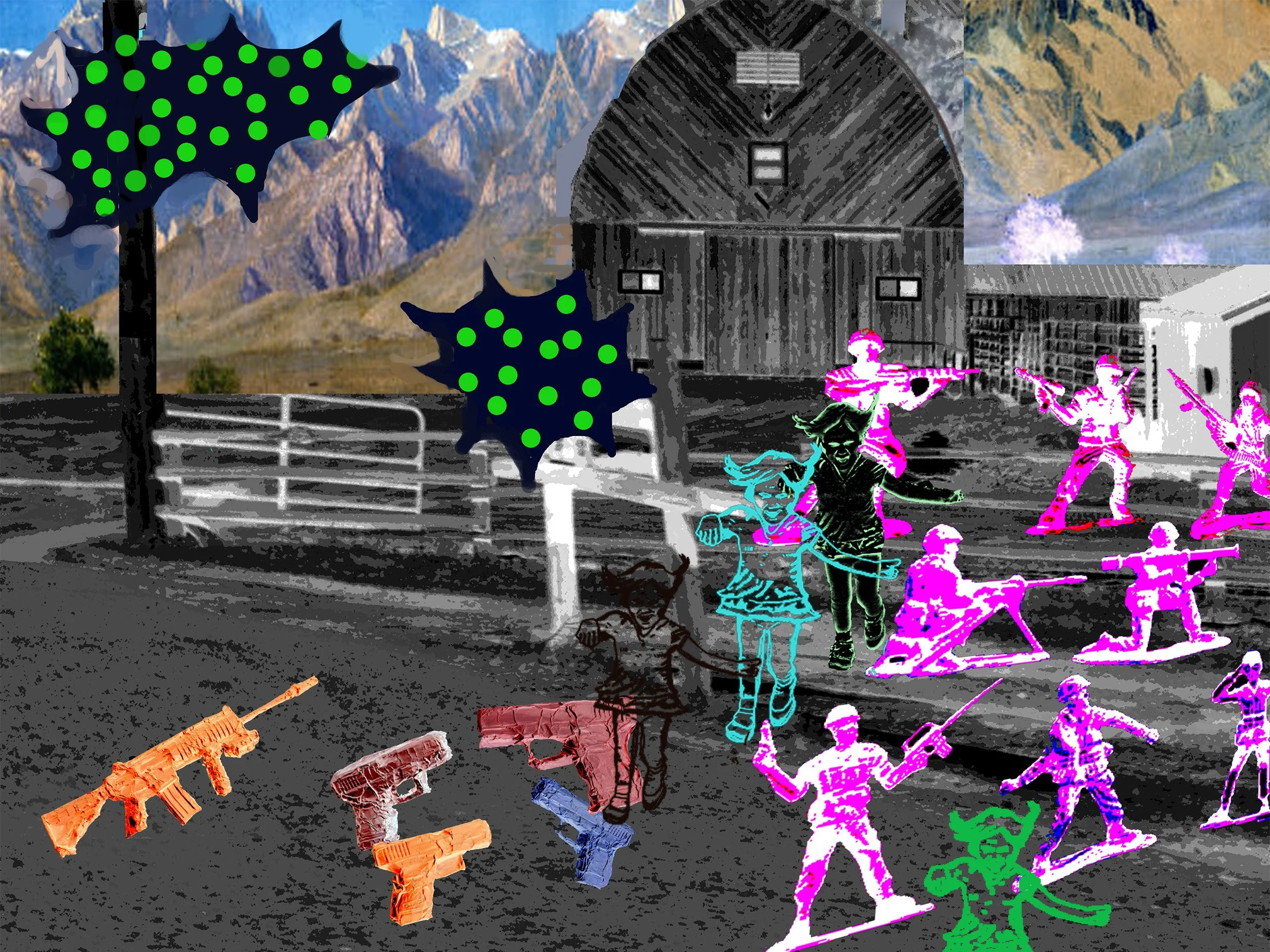
Black Barnyard (Digital painting)
Gun Drawing
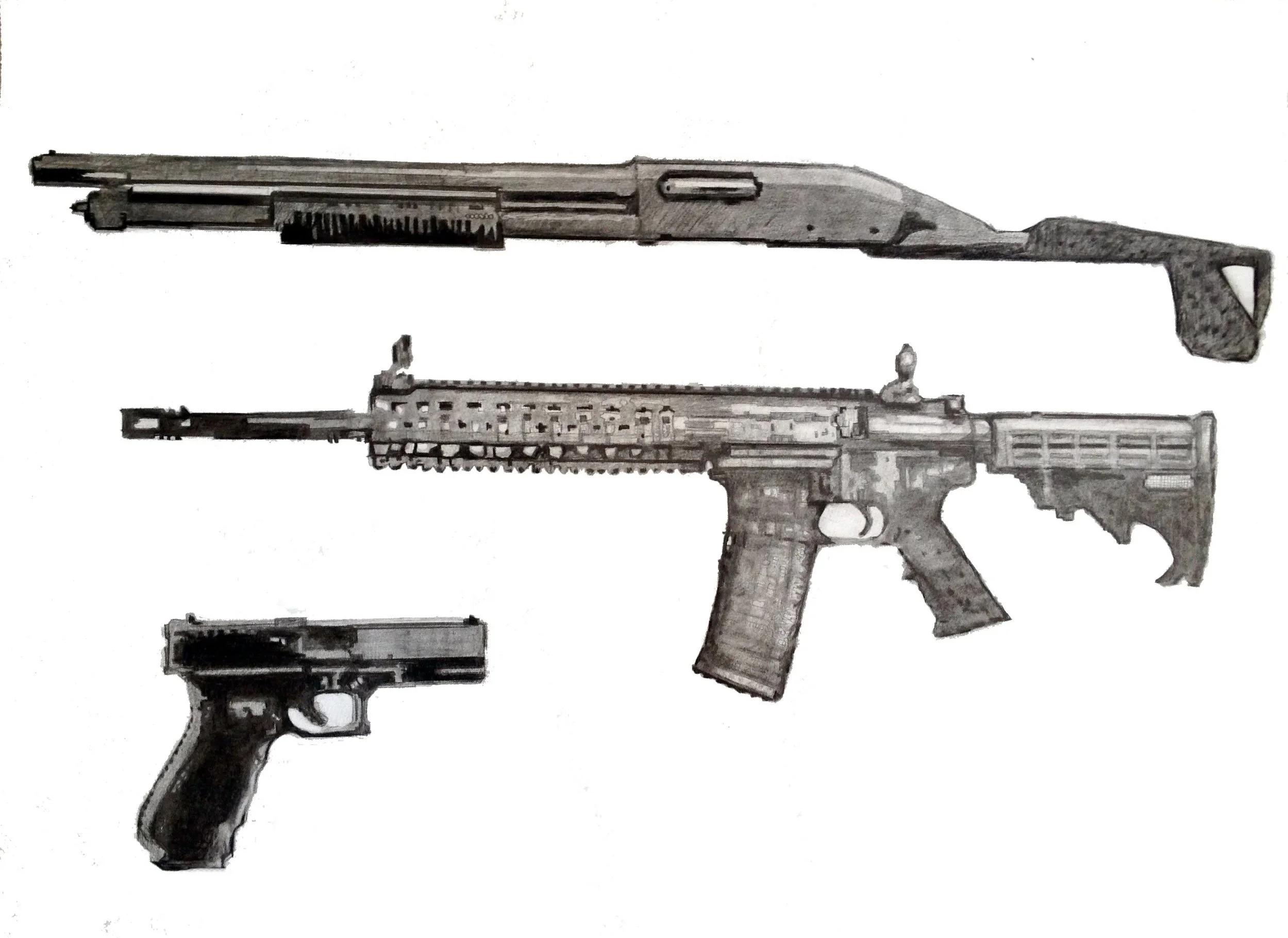
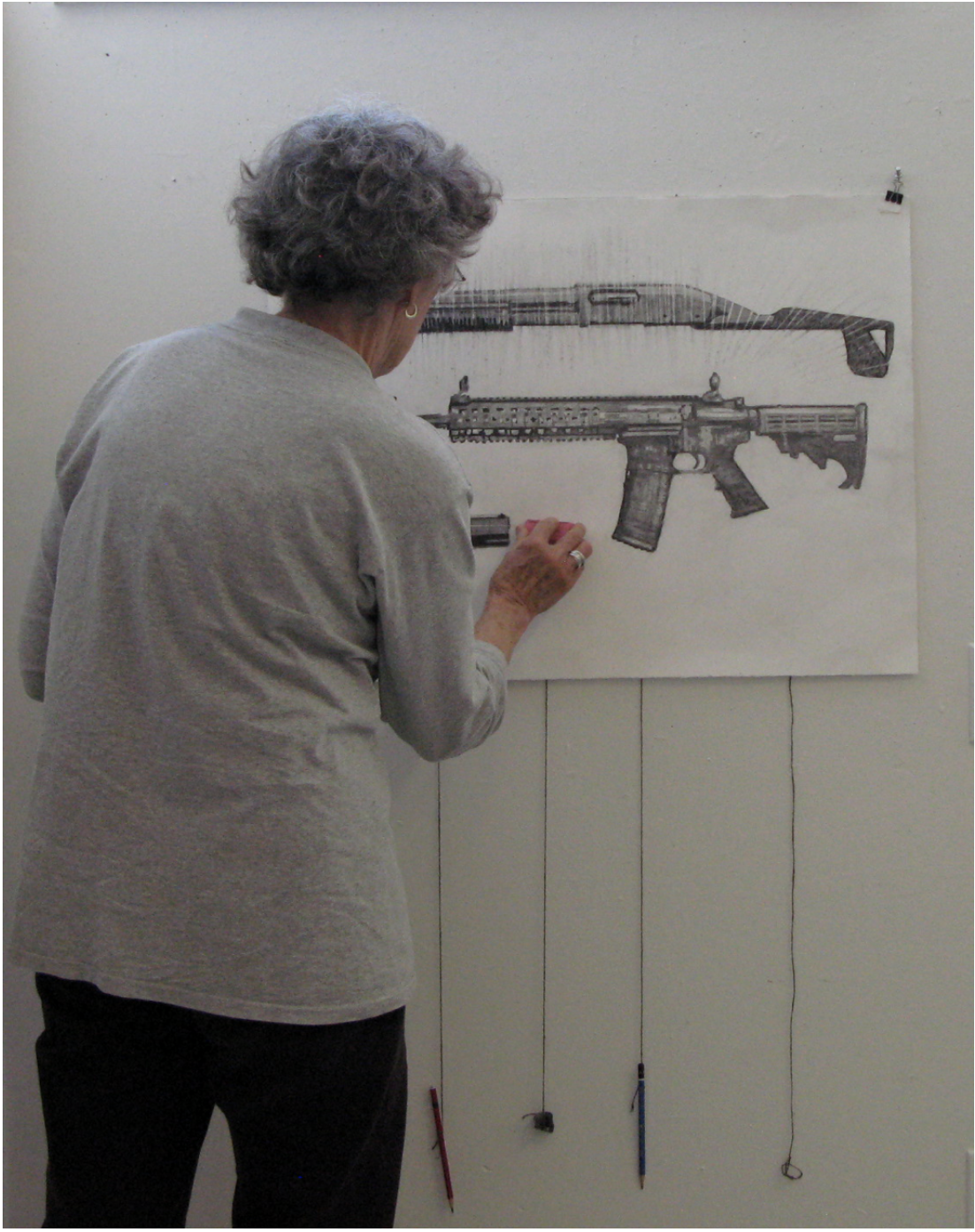
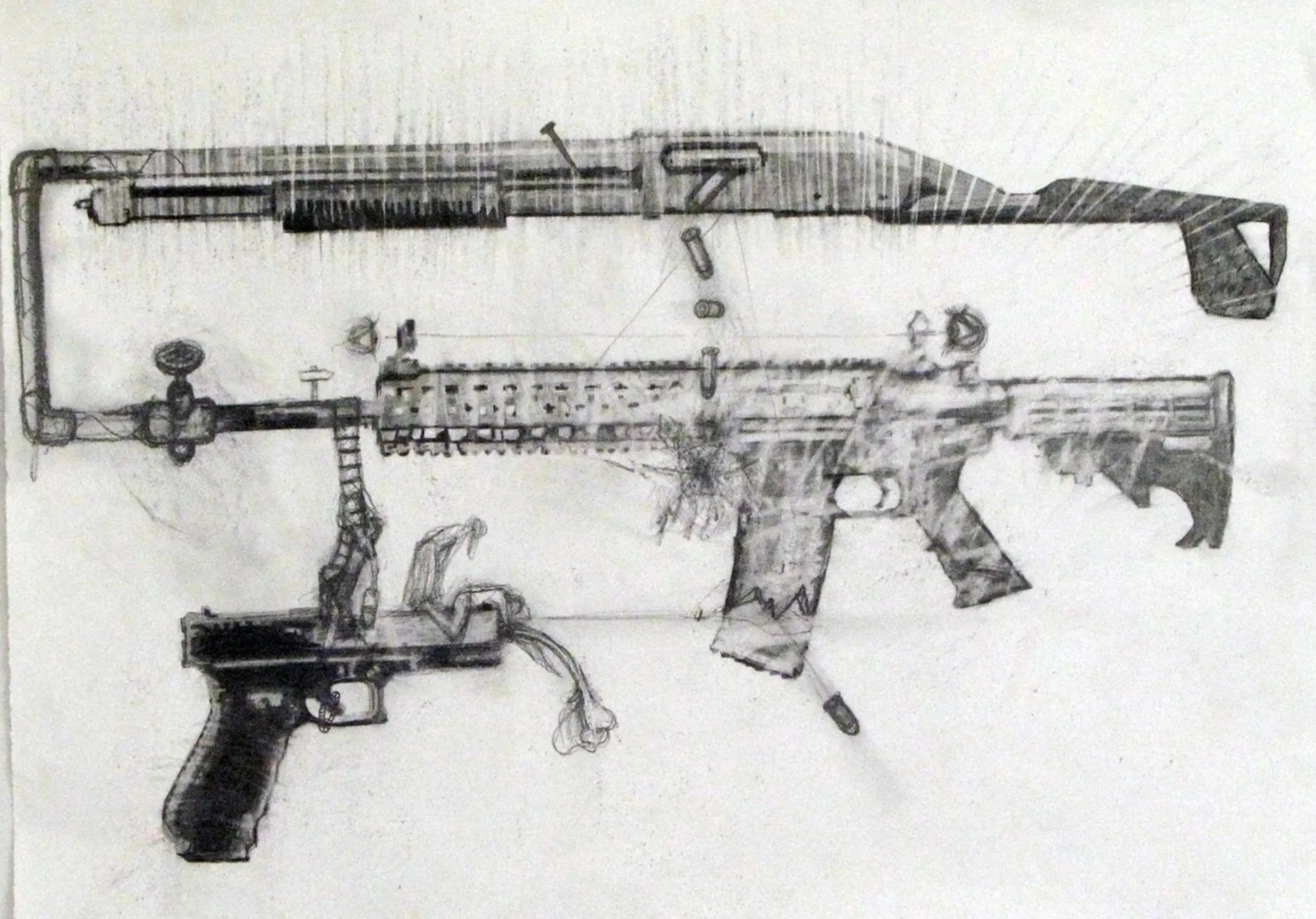
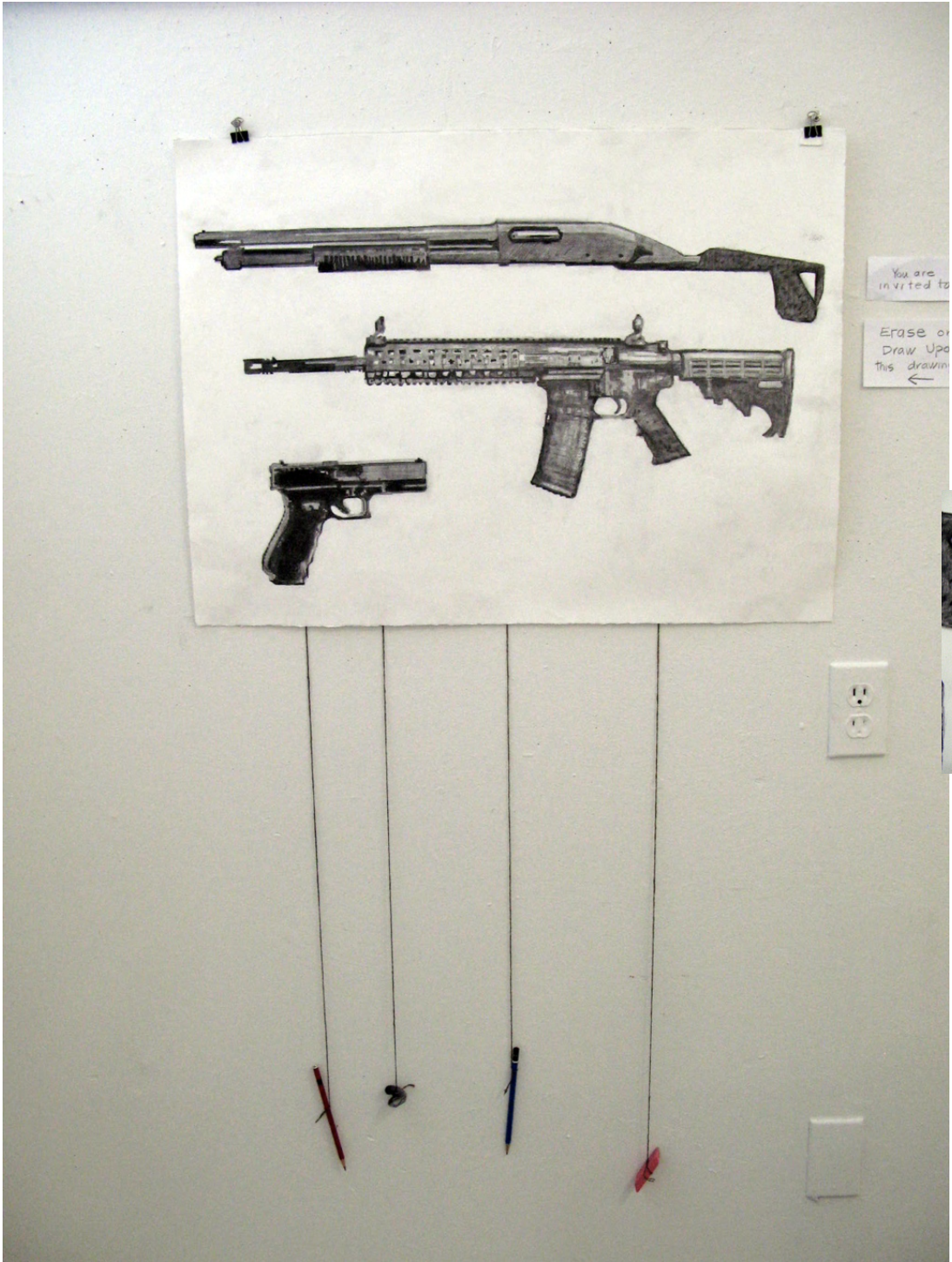
This was an interactive drawing project. I gave people an opportunity to erase or draw upon my own drawing. The drawings depicted the particular guns used in the public shooting in Aurora, CO - the AR 15 and the Glock pistol.
Smoking Gun
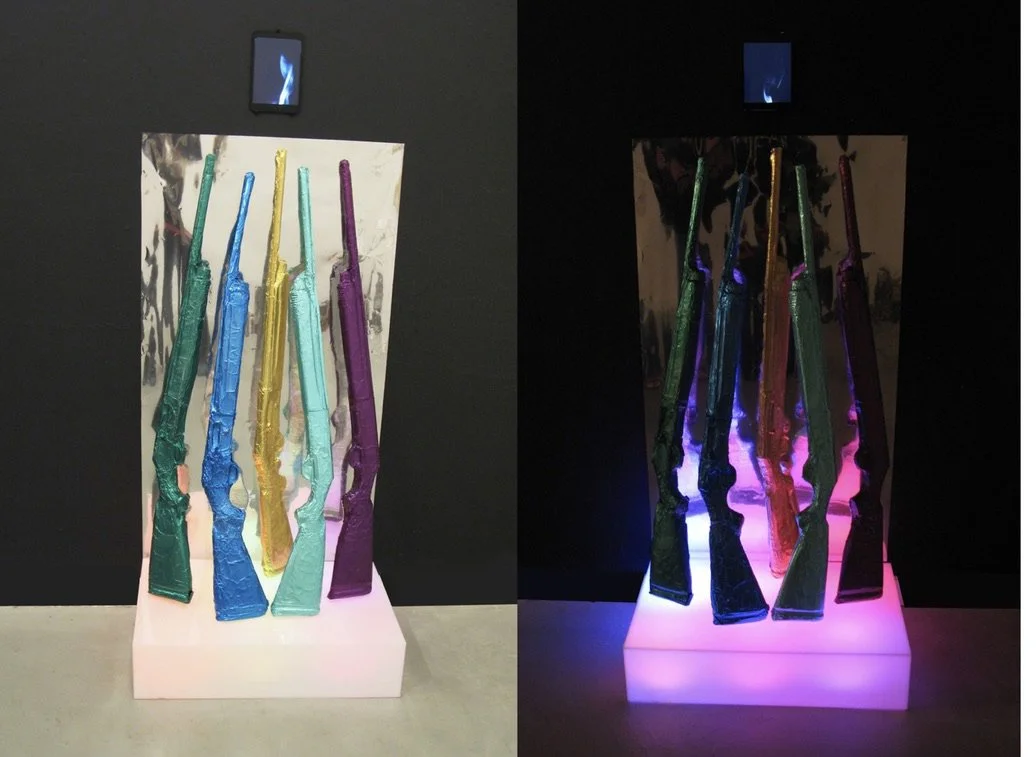
What would happen if firearms were merchandised like luxury goods?
As I encountered and collected examples of designer-patterned and youth-marketed firearms in my research, I became interested in the similarities between the marketing of luxury products and the expanding consumer market for guns. Borrowing the visual language of high-end retail—mirrored surfaces, acrylic, and flashing lights—I constructed an installation that invites viewers to consider how merchandising shapes desire, perception, and value.